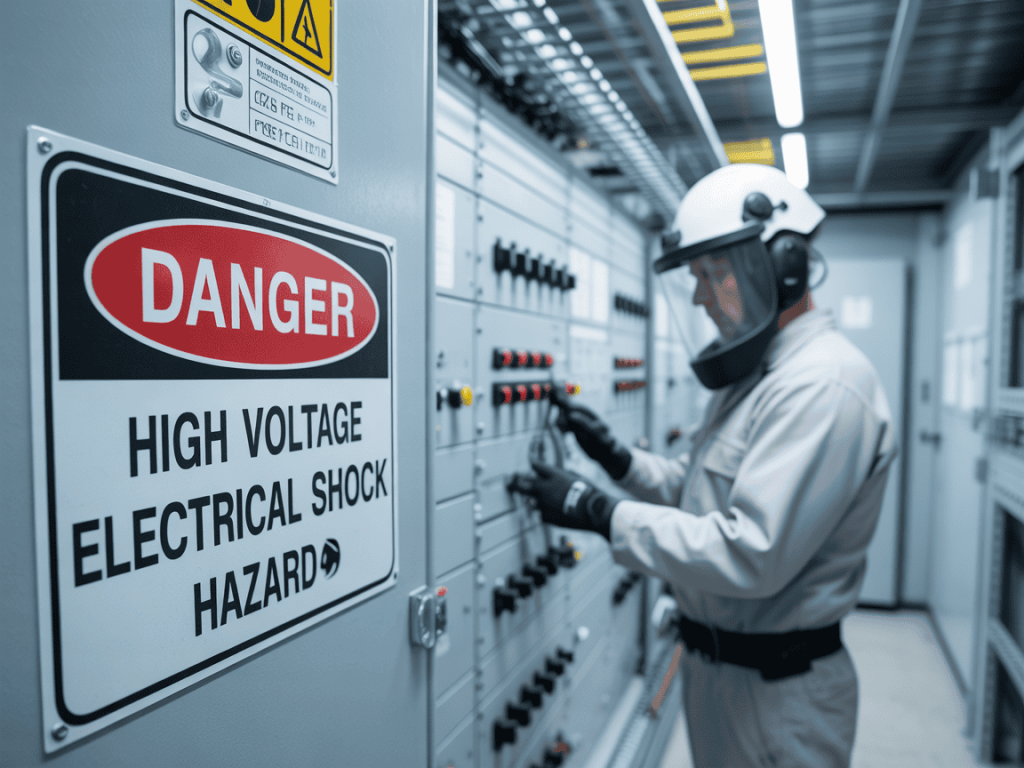
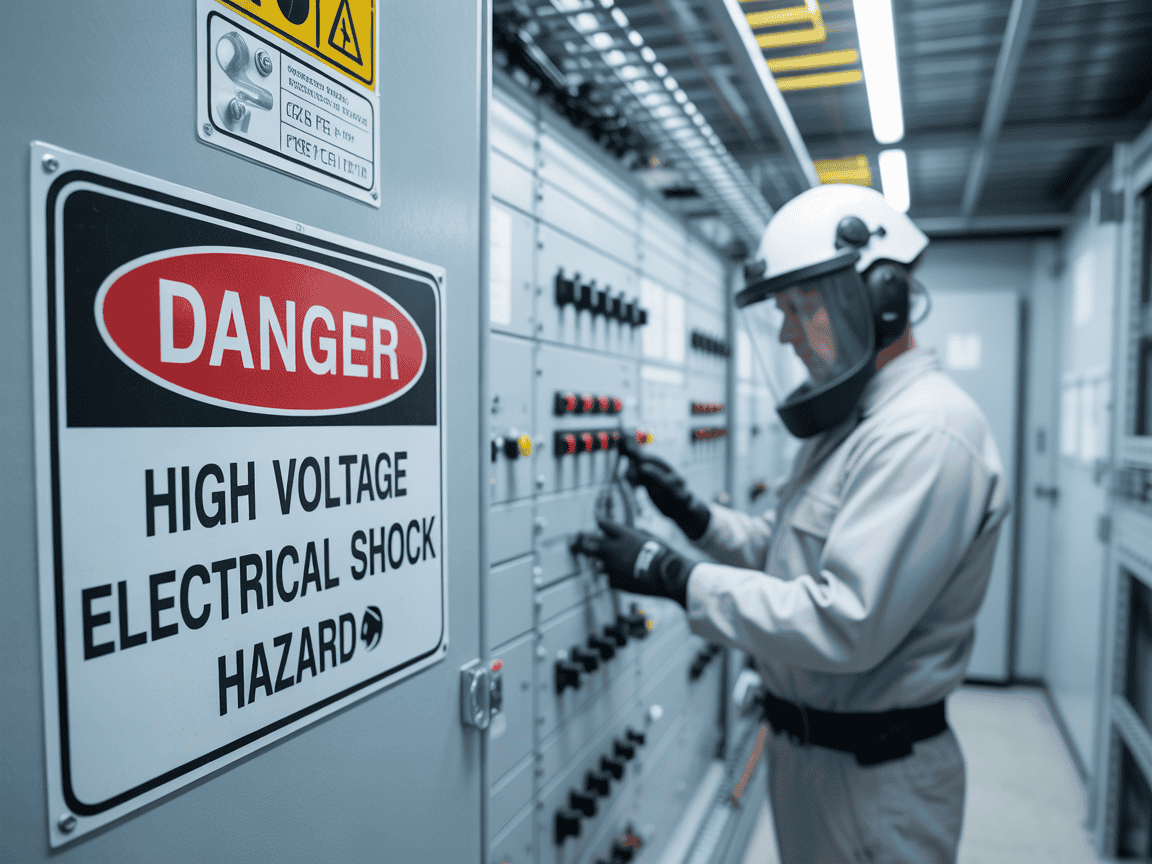
Electrical hazards can cause electric shock, burns, arc flash, fires and fatal injuries. In industrial workplaces, these risks extend beyond exposed wiring. Equipment may retain stored energy, receive power from more than one source, or become re-energized while maintenance is underway.
For maintenance teams, electrical supervisors and HSE managers, effective prevention starts with a simple principle: equipment that has stopped operating must not automatically be considered safe to work on.
This guide explains common electrical hazards, how they arise, and how verified energy isolation and lockout/tagout support safer industrial work.
What are electrical hazards?
An electrical hazard is a source or condition involving electrical energy that can cause injury or damage. Exposure may involve contact with energized parts, an electrical fault, or heat generated by electrical equipment.
The consequences are not limited to an initial shock. Electrical current can cause deep burns and loss of muscle control, leading to falls or contact with nearby machinery. Both alternating current and direct current can cause harm. See the UK Health and Safety Executive’s guidance on electrical injuries.
Common types of electrical hazards
Electric shock and electrical burns
Electric shock occurs when current passes through the body. Contact may be direct, such as touching an exposed conductor, or indirect, such as touching a metal enclosure that has become energized because of a fault.
The severity depends on factors including the current path, exposure duration and environmental conditions. Electrical burns can damage internal tissue even when the visible injury appears limited.
Arc flash
An arc flash releases intense energy during an electrical arcing event. Workers can suffer serious injuries without directly touching a live conductor.
Switching, troubleshooting and checking equipment for the absence of voltage require appropriate precautions. Turning equipment off is only one part of establishing an electrically safe work condition. OSHA addresses this distinction in its guidance on protecting employees from arc flash hazards.
Electrical fires and explosions
Faulty, overloaded or poorly maintained equipment can overheat. Electrical sparks can also ignite flammable atmospheres.
Low voltage does not mean that every associated risk is low: batteries can produce substantial heat during a short circuit, and even small sparks can ignite certain gases or vapors. These risks are discussed in HSE’s electrical injury guidance.
Unexpected energization and stored energy
A disconnected supply does not always remove every electrical hazard. Capacitors may retain energy, and alternative supplies or backfeed may energize parts assumed to be isolated.
Electrical work planning must identify all relevant sources and address stored energy before exposure. OSHA 1910.333 sets out requirements for this process in covered U.S. workplaces.
Where electrical hazards arise on industrial sites
Hazard identification should consider the equipment, the task and the surrounding operation.
Examples that an industrial risk assessment may need to examine include:
| Work situation | Question to resolve before work |
|---|
| Maintenance on equipment with multiple supplies | Have all possible sources been identified? |
| Work involving a UPS or battery system | What remains energized when the normal supply is disconnected? |
| Maintenance on equipment containing capacitors | How will stored energy be addressed and verified? |
| Commissioning alongside ongoing installation work | Which systems are energized, and who controls changes in status? |
| Work spanning several teams or shifts | How will protection and responsibility remain clear throughout the handover? |
| Equipment in wet, corrosive or physically demanding environments | Are inspection and maintenance arrangements suitable for those conditions? |
These questions help turn a general safety policy into a task-specific discussion. They must be resolved through the site’s approved assessment and procedures.
What causes electrical safety failures?
The accessible condition of equipment is only part of the picture. Planning and coordination also matter.
A useful review examines whether:
Equipment identification matches the task and current drawings.
Isolation arrangements account for every relevant supply.
Workers understand who may authorize changes.
Verification is completed before work begins.
Contractors and incoming shifts receive the necessary information.
Changes in work scope trigger a review of the original plan.
Consider an illustrative maintenance job involving equipment with a normal supply and a separate auxiliary supply. An instruction to “isolate the main power” leaves an important question unanswered: does the auxiliary supply create exposure within the work area?
The plan needs to resolve that question before the job starts.
How to prevent electrical hazards
Plan for de-energized work
For covered U.S. electrical work, OSHA generally requires exposed live parts to be de-energized before employees work on or near them, subject to specified exceptions. Where an exception applies, protective work practices remain necessary.
Production pressure should not be treated as a substitute for evaluating those requirements. Refer to OSHA’s electrical work practices standard.
Maintain equipment and respond to defects
Inspection and testing should reflect the equipment and its operating conditions. Equipment exposed to damage or harsh environments may need different arrangements from equipment in a clean, dry area.
Report defects promptly and have them assessed by someone competent for the equipment involved. HSE explains this approach in its electrical safety FAQs.
Use competent personnel and task-specific controls
Electrical work requires competence appropriate to the task. Experience with one type of equipment does not automatically establish competence for another.
The work plan should determine necessary access restrictions, protective equipment, tools and responsibilities. PPE supports the control strategy; it does not make isolation or verification unnecessary.
Secure isolation and verify before work
Control switches, push buttons and interlocks must not serve as the sole means of electrical isolation. The relevant sources must be disconnected, the required lockout and tagging arrangements applied, and stored energy addressed.
A qualified person must perform the required verification, including testing for possible induced voltage or backfeed. A status light or software approval cannot establish the absence of voltage. See OSHA 1910.333.
How lockout/tagout supports electrical safety
Lockout/tagout helps protect workers against hazardous energization during servicing and maintenance. It connects the isolation arrangements with clear control over who may restore energy.
In U.S. general industry, two requirements are often confused:
OSHA 1910.147 addresses hazardous energy control during covered machine servicing and maintenance.
OSHA Subpart S, including 1910.333, addresses electrical exposure associated with work on or near electrical conductors and equipment.
A job can involve both electrical exposure and other hazardous energy, so the applicable requirements must be evaluated together. OSHA explains the relationship between these standards.
For international operations, procedures must also reflect local requirements. A common corporate workflow should accommodate the rules applicable to each site.
Electrical safety planning checklist
Use these questions during planning and review. They support, rather than replace, an approved equipment-specific procedure.
Is the work scope clear?
Are equipment identification and drawings current?
Have all relevant energy sources been assessed?
Are isolation and verification responsibilities assigned?
Are the necessary personnel competent and authorized?
Are protective measures defined for the task?
Have affected teams been informed?
Are handovers and changes in scope controlled?
Is the return-to-service process understood?
Record unresolved questions and address them before authorizing the affected work.
How digital LOTO supports coordination and traceability
When several teams share equipment, isolation records need to communicate more than whether a request is open or closed. Teams need to understand the equipment involved, the responsible personnel and the stage of the approved workflow.
LOTOcontrol supports this coordination through:
Guided isolation requests and checklists.
Role-based digital approvals.
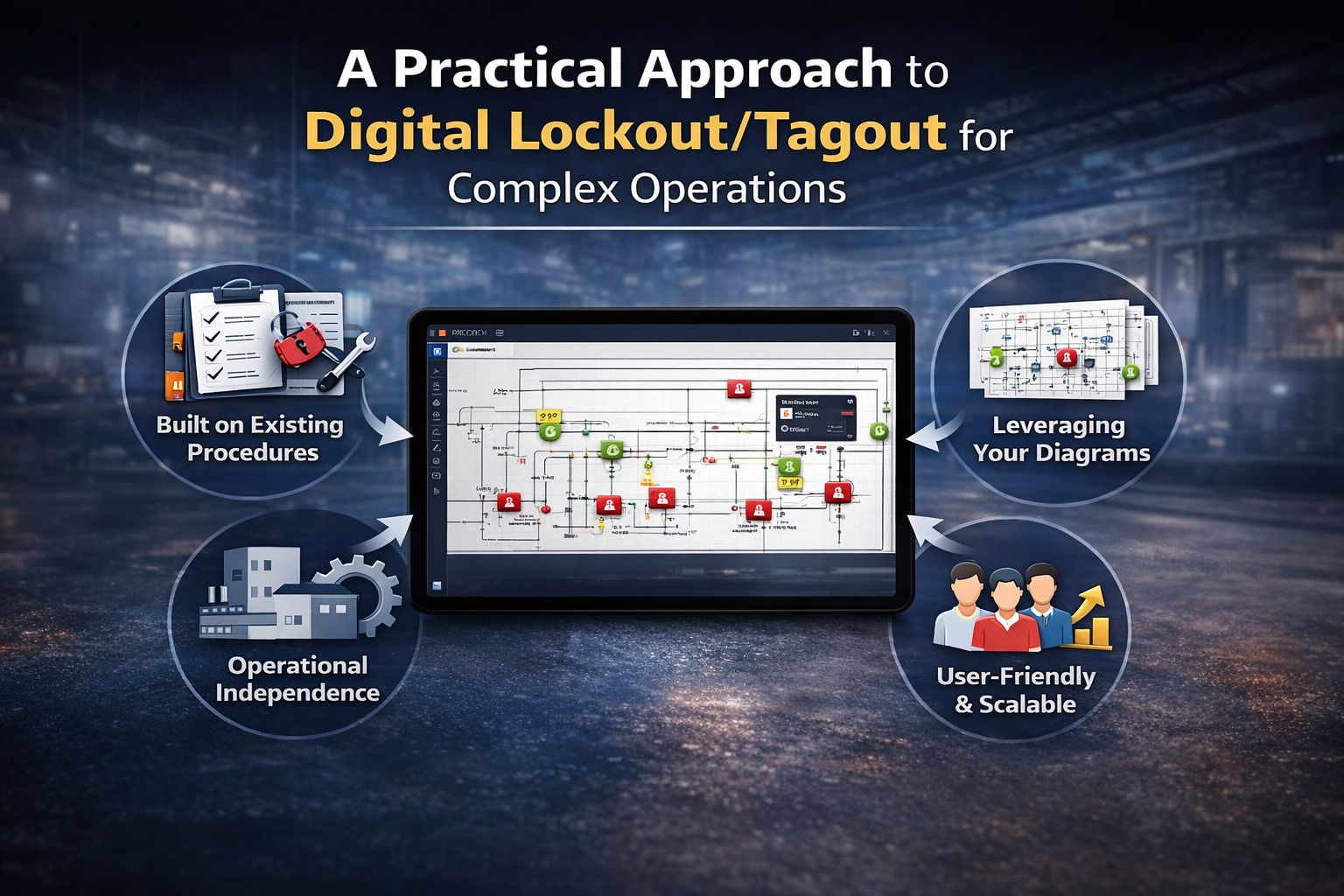
Visibility of active isolations on interactive diagrams.
Action histories and timestamped records.
Workflows configured around site procedures.
These capabilities help teams organize and review their isolation activities. Digital records do not replace physical isolation, field verification or competent decision-making.
Explore how LOTOcontrol works or read about digital LOTO for complex operations.
Frequently asked questions
Is switching off equipment the same as isolating it?
No. An operating control may stop equipment without disconnecting its energy sources. Safe maintenance requires the appropriate isolation, protection against reconnection and verification under the approved procedure.
Can low-voltage equipment be dangerous?
Yes. Low-voltage systems can still present shock, burn or fire hazards, depending on the conditions. Voltage alone is not a complete measure of risk. See HSE’s electrical safety guidance.
Does a digital LOTO record prove equipment is safe?
No. It records workflow information and confirmations. The equipment’s physical condition must be established through the required field actions and verification.
Why do handovers matter?
A maintenance task may continue after the original team leaves. The next team needs a clear understanding of the work, the protective arrangements and who controls subsequent changes.
Bring greater visibility to your isolation process
Electrical safety depends on reliable field practices supported by clear information and accountability.
If your team struggles to track isolation requests, coordinate approvals or retrieve records, LOTOcontrol can help structure those activities around your operating procedures.
Contact LOTOcontrol to request a demonstration.