First energization is the moment a data center project stops being only a construction site. Once the first medium voltage switchgear is live, trades keep installing and testing beside hazardous energy. Data center energization LOTO is the planning and control of energy isolation around that milestone. It has to start well before energization day.
In practice, isolation points, locks, tags, roles and approvals need to be ready weeks before the first breaker closes. They also need to stay accurate as the site changes every day. This guide covers what to prepare, a pre-energization checklist and how to keep control once power is live. For the fundamentals, see our guide to digital lockout tagout systems.
Why first energization on a data center is a high-risk transition
Most data center projects energize in phases. One hall or block of capacity goes live while the next is still under installation. As a result, the site moves from a construction mindset to an operational one within days. Not every team moves at the same pace.
Several factors make this transition demanding:
- Live and non-live equipment sit side by side, sometimes in the same room.
- Many contractors work in parallel, each with its own scope and schedule pressure.
- Drawings keep changing while crews install and test equipment.
- Energy can arrive from more than one direction: utility supply, generators, UPS systems, batteries and temporary power.
- Commissioning teams need to energize and isolate equipment repeatedly to complete testing.
None of this is unusual on a fast build. It is why isolation needs the same planning as the energization sequence itself.
Where data center energization LOTO usually breaks down
Many problems come from information gaps rather than equipment failure. Typical examples include:
- Equipment assumed to be dead because it is not yet in service, or because nobody said it went live overnight.
- Temporary construction power and permanent supplies feeding the same area, with an unclear boundary between them.
- An isolation on the main source but not on a second source, such as a generator, UPS or tie breaker.
- Stored energy overlooked, for example in UPS batteries, capacitors or mechanical systems such as chilled water pumps.
- Locks in the field that do not match the latest single line diagram (SLD) revision or isolation list.
- Approvals given verbally or by message, with no record of who authorized what.
- Isolation status that one team knows but never shares with the next shift.
Good preparation reduces each of these risks, starting with the six areas below.
What to prepare before data center energization
Six areas need attention before the first breaker closes. Each one depends on the approved procedure, so start there.
1. An approved energization plan
Everything starts with the project’s approved procedure. It should define the energization sequence, who authorizes each step, how teams request and approve isolations, and how to manage changes. Many data center projects call this document the energization safety plan. It works alongside the general contractor’s and the client’s own LOTO requirements.
The plan should also reflect the rules that apply where you build. In the United States, OSHA 29 CFR 1910.147 covers hazardous energy control in general industry. However, construction work and many electrical hazards fall under other OSHA rules, so confirm which ones apply to each project phase. Many US projects also apply NFPA 70E, a consensus standard for electrical safety in the workplace. Elsewhere, follow the local regulator, for example DOSH in Malaysia.
Agree the plan before field preparation starts. Otherwise, crews prepare locks and tags around a changing procedure, and rework lands at the worst time.
2. Isolation points on the current SLD
Identify every point that will need a lock on the latest SLD, together with its upstream sources and downstream equipment. This is where backfeed risks appear: a generator, UPS output or tie breaker that could re-energize equipment believed dead.
Also include energy that is not electrical. Stored energy in batteries and capacitors may need its own control. So may standby generators that start automatically and mechanical systems such as cooling plant. Mark the points on the drawing the teams actually use, and agree who keeps it current. An isolation list that drifts from the latest SLD revision is a common source of confusion.
3. Locks, tags and verification
Count the isolation points, then plan padlocks, tags, hasps and lockboxes against them. Numbering, color coding and lock ownership should follow the procedure. Many projects also use a distinct energy marshal lock that comes off last, as the procedure defines. Preparing tags in advance, with equipment references and isolation details already filled in, saves time when the schedule is tightest.
Next, define how the team will verify absence of voltage: who tests, with which approved instrument, and where the result goes. A lock secures the isolating device. Only a test by a qualified person confirms that no voltage is present.
4. Roles and authority
Before energization, everyone should know who requests, approves, applies and verifies each isolation, and who authorizes energization. On many data center projects, the energization LOTO team includes the energy marshal, a deputy and the electrical contractor. It also includes the commissioning team, the general contractor and the client representative.
Write down names, not just roles. Our article on digital LOTO for project stakeholders explains how these responsibilities differ.
5. Access control and signage
Clearly identify rooms with energized equipment, and restrict access to authorized personnel. Signage, barriers and room status need to change at the same time as equipment status. A switch room that is live but still looks like a construction area is a risk in itself.
6. A communication plan
Every team on site should know what goes live, when, and what it means for their work. Hold a pre-energization meeting several days before major equipment goes live. Then walk the site regularly with the electrical contractor and project team. Meanwhile, the client will expect a clear view of what is live.
Pre-energization checklist for data center LOTO
Use this list as a starting point for data center energization LOTO, and adapt it to your approved procedure. This article provides general information. Apply your approved site procedures and applicable requirements under the supervision of authorized personnel.
- Approve and issue the energization plan and LOTO procedure.
- Agree the energization sequence with commissioning and the electrical contractor.
- Mark every isolation point on the latest SLD revision.
- Identify upstream sources and backfeed paths, including generators, UPS, batteries and temporary power.
- Identify stored and non-electrical energy that needs its own control.
- Prepare and number padlocks, hasps and lockboxes, with tags showing equipment references.
- Define how to verify absence of voltage, and make approved test instruments available.
- Name and brief the energy marshal, deputy and authorized persons.
- Put access control, barriers and signage in place for rooms that will go live.
- Hold the pre-energization meeting and close its actions.
- Walk the area to confirm the field matches the plan.
- Agree how teams request isolations and changes after energization.
- Decide where the team will keep records of every isolation and energization step.
Keeping control after energization
Data center energization LOTO does not end when the first breaker closes. From that point, every modification, test or rework on energized equipment needs an isolation under the approved procedure. In addition, a method of procedure (MOP) often governs work on live systems, and it should reference the isolations it depends on.
In phased builds, each new phase adds equipment to the live system, so the SLD status must change every time. Requests multiply, and the energy marshal team can become a bottleneck. Meanwhile, the client wants an up-to-date view of what is live.
Records matter as much as the locks themselves. For each isolation, a complete record shows who applied each lock and when. It also shows which equipment the team isolated, how they verified absence of voltage and who authorized re-energization. Clients often ask for this evidence at handover.
Where paper and spreadsheets reach their limits
Paper permits, lock boards and spreadsheets can support data center energization LOTO well, and many projects have run this way. The challenge is scale and speed.
With hundreds or thousands of isolation points, several contractors and weekly drawing revisions, one shared picture becomes a full-time job. Status sits in registers, whiteboards and phone calls. Finding who holds a lock, or rebuilding an isolation sequence weeks later, takes time.
Digital tools do not change the procedure. Instead, they add visibility, coordination and traceability to the way teams carry it out.
How LOTOcontrol supports data center energization
LOTOcontrol is digital lockout/tagout management software built from its founder’s 15+ years of Tier-1 EPCC project and commissioning experience. LOTOcontrol configures the approval workflow around your approved procedure. Clients can update their drawings and equipment configuration, while workflow changes require LOTOcontrol.
For data center energization LOTO, the platform provides:
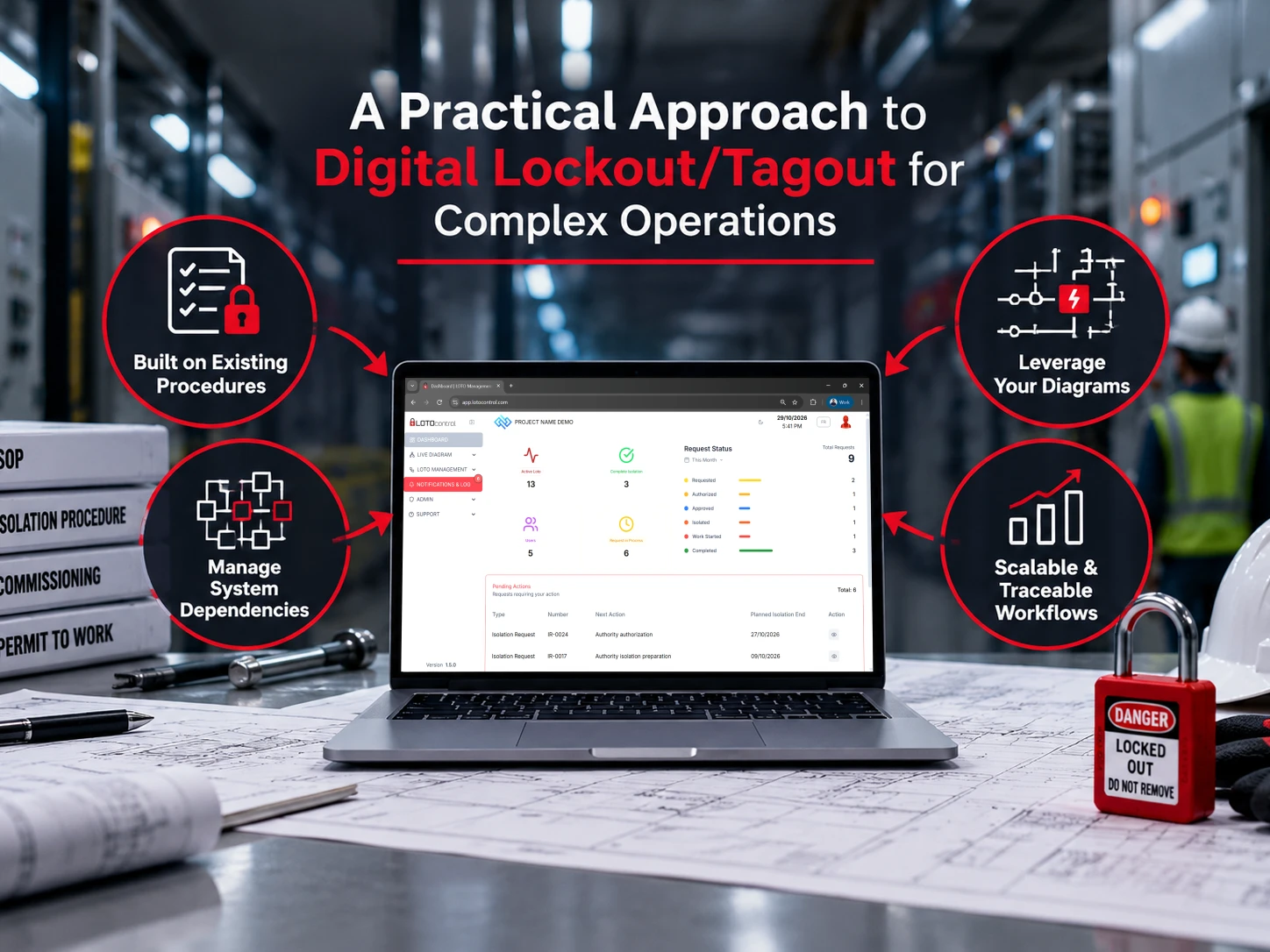
- A dedicated Commissioning workflow. It includes a 9-step energization process for bringing systems online after commissioning. The software records energization requests and approvals, while authorization follows the site procedure.
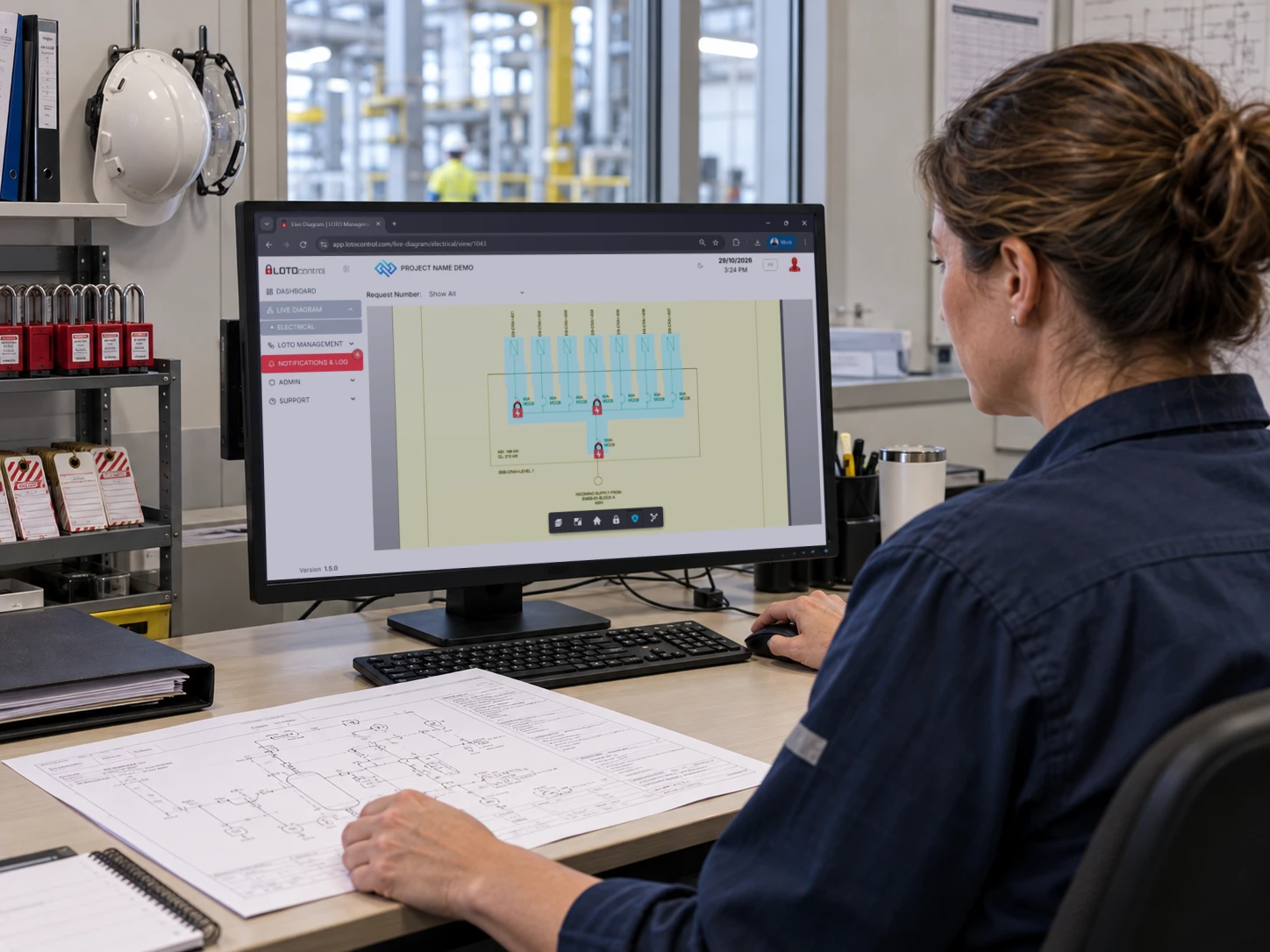
- Interactive diagrams on your own SLDs. The live diagram shows recorded isolation status. Physical isolation and verification remain with authorized personnel under the site procedure.
- Scheduling. Teams plan isolations and energizations on a calendar, so crews know what is coming.
- Mobile field records. iOS and Android apps support requests, approvals, QR scanning, photo evidence and isolation confirmation. Optional tag printing fills LOTO tags from the approved request.
- Audit trail and certificates. Every action links to an authenticated user, with digital signatures, a timestamped history and automatic certificates.
LOTOcontrol works with mechanical padlocks, smart padlocks or a mix of both. An Operations workflow also supports the site after handover. LOTOcontrol can run for a single project or site, or across an enterprise, in the cloud, a dedicated cloud or on premise. See how LOTOcontrol works for the full workflow.
Like any digital system, LOTOcontrol does not physically isolate equipment. Locks, tags and field verification remain the responsibility of trained, authorized personnel following the approved procedure.
Frequently asked questions
What is first energization on a data center project?
It is the first time permanent electrical equipment, typically medium voltage switchgear and transformers, connects to a live supply. From that point, part of the site is live while construction and commissioning continue around it.
What should a pre-energization checklist include?
At minimum, it covers an approved energization plan, isolation points on the current SLD, prepared locks and tags, and a verification method. Add named roles, access control for live rooms and a communication plan.
Which energy sources are easy to miss?
Second supplies are the usual blind spot: standby generators, UPS outputs, tie breakers and temporary construction power. Stored energy in batteries and capacitors, and mechanical systems such as cooling plant, also need attention.
Does digital LOTO replace physical locks during energization?
No. Physical locks, tags and field verification remain part of the approved procedure. Digital LOTO manages the planning, approvals, recorded status and records around them.
Can LOTOcontrol follow our existing energization procedure?
LOTOcontrol configures the workflow around your approved procedure, including its roles, terminology and approval structure. It runs on your project’s own SLDs, and workflow changes after setup go through LOTOcontrol.
Start data center energization LOTO early
First energization takes months of planning, yet teams often leave data center energization LOTO to the final weeks. Starting early, with isolation points on the current SLD and roles confirmed, gives teams time to test the plan.
Request a LOTOcontrol demonstration to review your data center energization LOTO plan using one of your own SLDs.