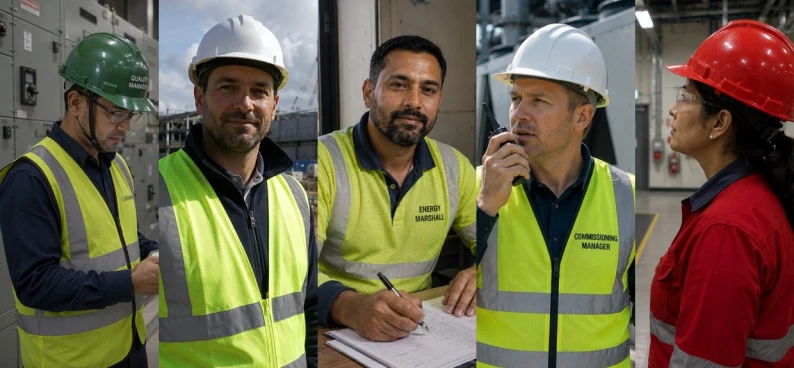
Digital LOTO project stakeholders, first, experience lockout/tagout differently, and that difference is exactly the point.
For a Project Manager, energy isolation particularly affects delivery, client confidence and company reputation. For an Energy Marshal, meanwhile, it means keeping requests, approvals and people organized. Commissioning needs visibility before energization, safety needs confidence in procedural execution, and quality, likewise, needs documented evidence.
These priorities, nonetheless, meet within the same process. An isolation request, consequently, moves between people, disciplines and approval stages, with each action influencing what happens next.
Digital LOTO therefore connects those activities through shared information, structured workflows and traceable records. This article, specifically, explores the five perspectives featured in our LinkedIn series and how LOTOcontrol supports digital LOTO project stakeholders.
1. The Project Manager’s Perspective: Protect Client Confidence and Company Reputation
The Project Manager’s message in our LinkedIn series, notably, captures a responsibility that extends beyond the schedule:
“My job isn’t just delivering a project on time. It’s protecting my client’s confidence and my company’s reputation.”
Clients certainly expect critical activities to be managed with discipline. They also want clear responsibilities, reliable information and confidence that the project team understands the status of its work.
Energy isolation, undoubtedly, contributes directly to that confidence. Unclear approvals, inconsistent updates and missing records can, in turn, make it difficult to explain why an activity is delayed or whether the required reviews have been completed.
For this particular project stakeholder, useful visibility means being able to understand:
- Which activities are awaiting action.
- Who is responsible for the next decision.
- What is affecting the planned sequence.
- Which issues require escalation.
- What evidence supports the project’s reported progress.
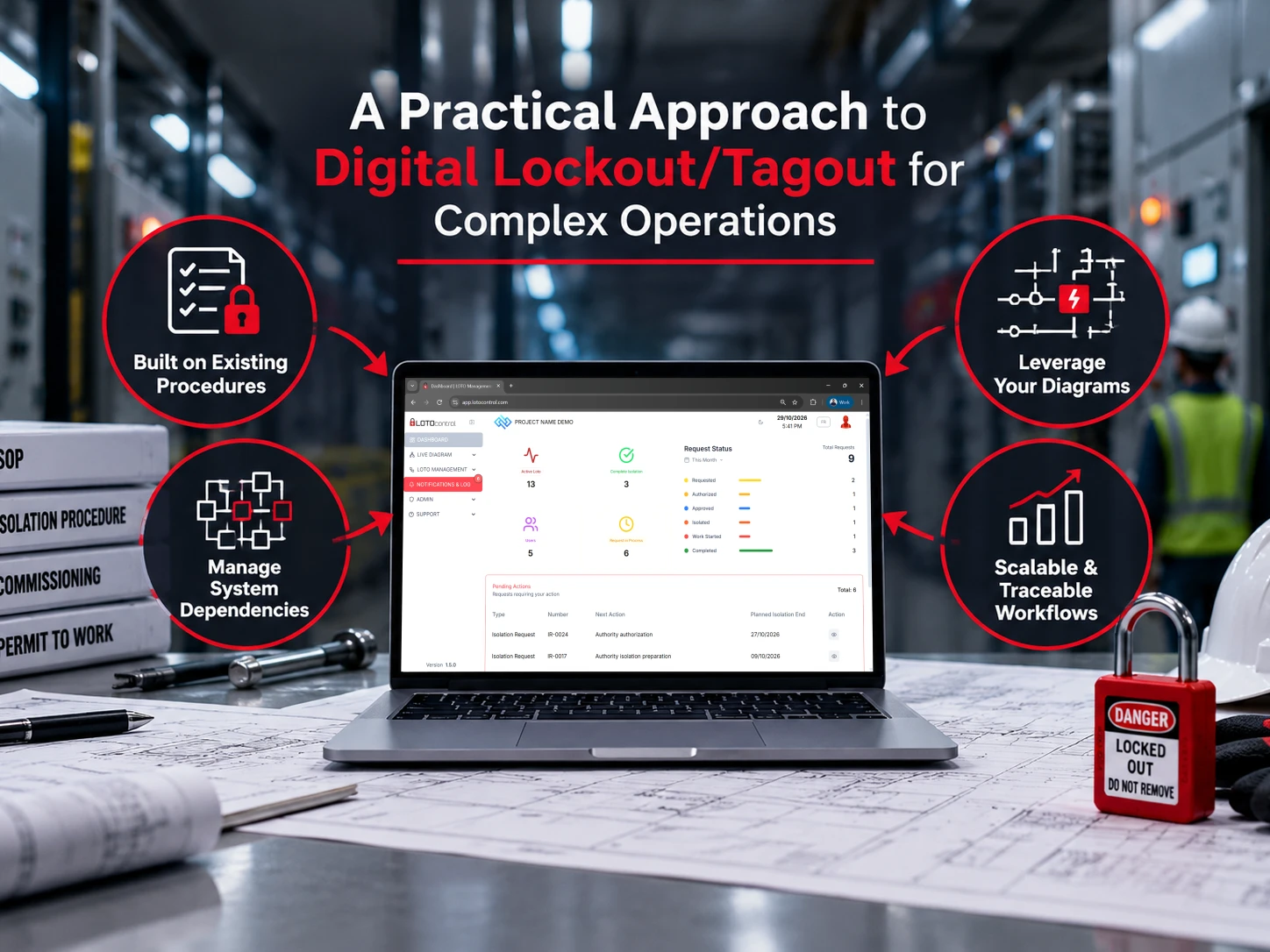
LOTOcontrol brings isolation requests, approval stages and responsible personnel into a shared workflow. This, consequently, supports more informed coordination meetings and clearer discussions with clients.
For example, when an activity is waiting for technical review, project leadership can identify the outstanding action and help resolve the constraint. The designated reviewer, however, retains responsibility for the decision.
Overall, the result is a clearer basis for managing delivery and demonstrating that critical activities are being handled systematically.
2. The Energy Marshal’s Perspective: Keep Every Activity and Stakeholder Aligned
The Energy Marshal’s priority, above all, is organization across the full isolation process.
Our LinkedIn series expresses that need as one organized system connecting every activity, approval and stakeholder.
On a busy project, the coordinator may, for instance, be following several requests at different stages. One is awaiting approval, another requires field confirmation, and a third, meanwhile, needs review because the work scope has changed.
When these updates, however, sit in separate spreadsheets, messages and paper registers, maintaining a consistent picture takes considerable effort.
These digital LOTO project stakeholders need to connect:
- The request and its work scope.
- The equipment and isolation references.
- Assigned reviewers and approvers.
- Padlock information and responsible personnel.
- Recorded execution and outstanding confirmations.
- Changes and completion status.
LOTOcontrol centralizes this information, thereby helping the coordinator follow each request through its defined workflow.
For instance, when several contractors submit requests involving related equipment, a shared register gives the Energy Marshal a starting point for coordinating the relevant reviews.
This, hence, makes the role’s daily work more manageable. Information is, as a result, easier to locate, outstanding actions are easier to identify, and stakeholders can discuss the same recorded activity.
In fact, role titles may differ between organizations. Whether the position is called Energy Marshal, Isolation Coordinator or another designated title, the project procedure should nevertheless clearly define its authority.
3. The Commissioning Manager’s Perspective: Visibility Before Critical Energization
The commissioning message, plainly, is direct:
“I coordinate critical energizations. I can’t afford assumptions, and I need real-time visibility of every active isolation.”
During commissioning, system conditions change as installation, inspection, testing and energization progress. Multiple contractors may still be working, and temporary arrangements may, additionally, affect the planned sequence.
The Commissioning Manager, therefore, needs a clear understanding of the activities associated with the system being reviewed.
That includes knowing which isolation records are active, who is responsible, what work remains outstanding and which decisions are still required.
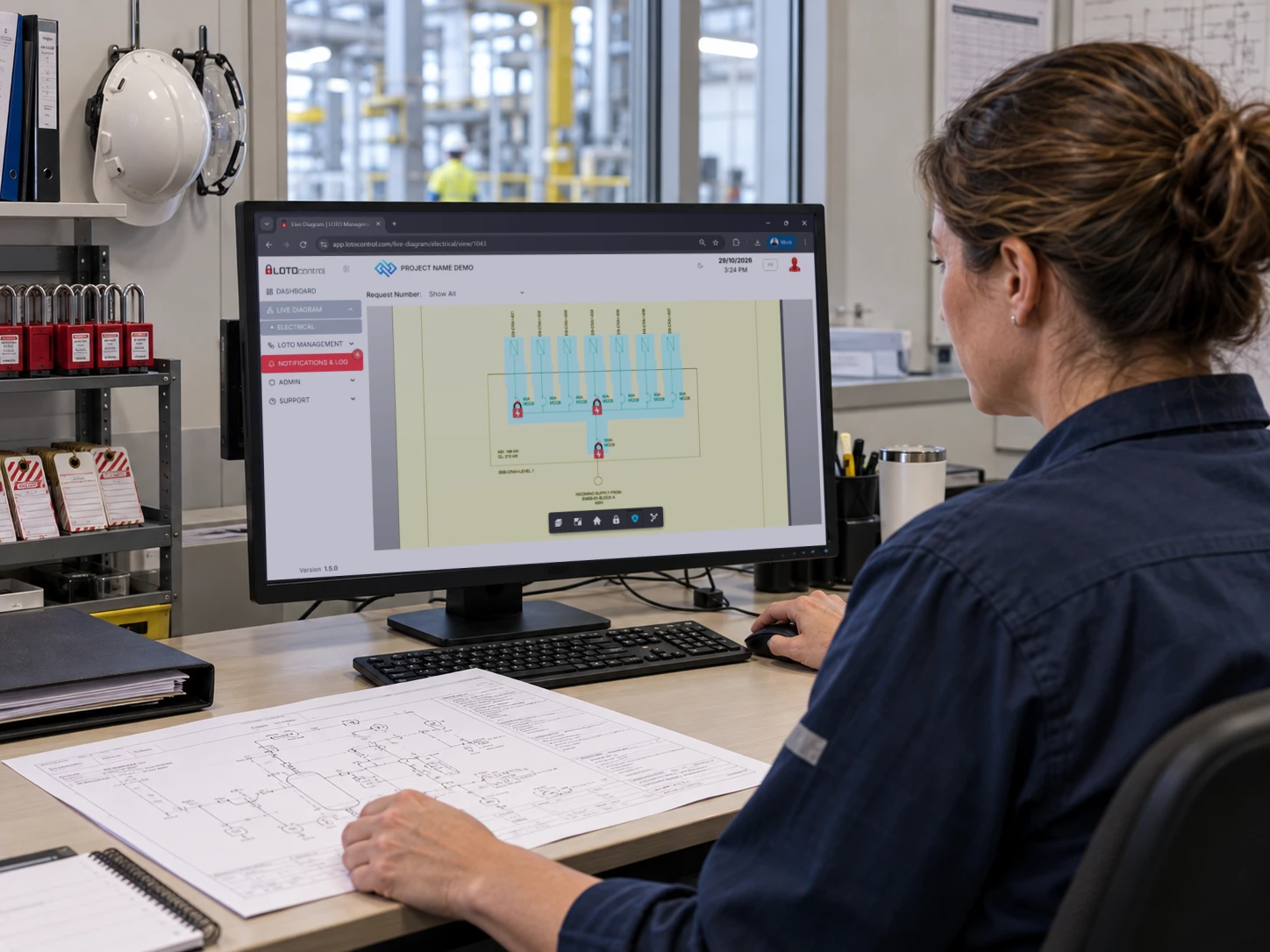
LOTOcontrol displays recorded isolation information on project schematics, so this project stakeholder gains a common reference for discussing equipment, requests and status changes.
For example, before a proposed energization, the team can review associated isolation records and identify outstanding activities requiring clarification. The discussion becomes more specific, since the relevant equipment and records are visible together.
Indeed, the meaning of the displayed status must remain clear. Software supports coordination through recorded information; required physical checks and verification still follow the approved procedure.
For this project stakeholder, ultimately, the value is better visibility during decisions where incomplete information can create uncertainty.
4. The Safety Officer’s Perspective: Confidence in the Approved LOTO Procedure
The Safety Officer’s priority, simply, is protecting people through consistent execution.
As the LinkedIn series states:
“My responsibility is keeping people safe. I need confidence that every critical isolation follows the approved LOTO procedure.”
The people carrying out the work, first of all, need to understand and apply an approved procedure. They must know which information is required, what their actions confirm and when another person must review or approve the next stage.
A digital workflow can, indeed, make those expectations clearer.
LOTOcontrol supports configured approval routes, assigned responsibilities, guided steps and recorded acknowledgements. These, in turn, help translate the company’s procedure into a process this project stakeholder can follow.
For the Safety Officer, useful oversight includes being able to review:
- Whether the required information has been provided.
- Which reviews and approvals have been recorded.
- Who confirmed the relevant actions.
- Which requests were returned for clarification.
- Whether recurring issues need attention.
In particular, repeated requests with incomplete equipment references may indicate a need to improve instructions, training or the request form.
Moreover, this gives the safety team practical information for improving execution.
Digital records, additionally, complement field supervision and competent decision-making. Their purpose, essentially, is to support the approved process and make its recorded execution easier to review.
5. The Quality Manager’s Perspective: Document Every Isolation for Audit
The Quality Manager’s LinkedIn message, above all, emphasizes evidence:
“Quality isn’t based on trust. I need every isolation fully documented and ready for audit.”
A completed activity should, of course, leave a record that another person can understand and review.
During a client audit or project handover, this project stakeholder may, for instance, need to explain which equipment was involved, who approved the request, what was confirmed and how the activity was closed.
That becomes difficult, however, when the evidence is distributed across individual inboxes, handwritten forms and separate registers.
LOTOcontrol connects recorded approvals, timestamps, acknowledgements, padlock information and supporting evidence within the isolation history.
A useful record helps answer:
- Who requested the work?
- Which equipment and documents were referenced?
- Who reviewed and approved the request?
- Which actions were confirmed, and by whom?
- What changes occurred?
- How was completion recorded?
Specifically, when a client asks for the history of an isolation during handover, the quality team can review the connected record instead of reconstructing the sequence from multiple sources.
Audit readiness, accordingly, depends on accurate and complete information being captured throughout the activity. A digital platform, primarily, helps organize and retrieve that evidence.
How the Five Digital LOTO Project Stakeholders Connect
Each of these digital LOTO project stakeholders, naturally, needs a different view of the same isolation process.
| Stakeholder | Central priority | How digital LOTO supports it |
|---|
| Project Manager | Client confidence and company reputation | Visibility of progress, responsibilities and outstanding decisions |
| Energy Marshal | Organized coordination | Connected requests, approvals, personnel and isolation records |
| Commissioning Manager | Visibility before energization | Recorded isolation information displayed alongside project schematics |
| Safety Officer | Consistent execution of the approved procedure | Defined workflow stages, responsibilities and confirmations |
| Quality Manager | Documentation and audit readiness | Retrievable histories, approvals and supporting evidence |
These priorities, evidently, depend on one another.
The Project Manager’s confidence is, in short, strengthened by organized coordination. Commissioning decisions, likewise, benefit from current information. Safety reviews depend on clear responsibilities, whereas quality records depend on meaningful confirmations throughout the process.
A shared workflow, therefore, connects those contributions while preserving each person’s assigned authority.
Applying Digital LOTO for Project Stakeholders Across Global Projects
Organizations, of course, operate across different countries, client requirements and project structures. Approval roles and terminology may vary, even though the underlying coordination needs are similar.
A digital LOTO workflow should, ideally, reflect the company’s approved procedures and the requirements applicable to the site.
During implementation, accordingly, involve the people represented by these five perspectives. Also ask each group what information it needs, which actions it performs and what decisions it is authorized to make.
This, ultimately, helps establish a practical workflow that supports project leadership, coordination, commissioning, safety and quality together, for every project stakeholder involved.
For a closer look at evaluation criteria, read how to choose digital LOTO software for complex operations.
Frequently Asked Questions for Digital LOTO Project Stakeholders
What is digital LOTO?
Digital LOTO, simply put, is the use of software to manage information and workflows surrounding lockout/tagout, including requests, approvals, responsibilities and records. Learn more in our digital lockout tagout system guide.
Why should several project stakeholders use the same platform?
Their activities are clearly connected. Shared information, consequently, helps each stakeholder understand progress, outstanding actions and the people responsible, without repeatedly reconciling separate records.
Can LOTOcontrol follow our existing approval process?
LOTOcontrol supports workflow configuration around company procedures and approval hierarchies. The required stages, responsibilities and permissions should, of course, be agreed and validated during implementation.
Does live isolation visibility replace field verification?
No. The platform, nonetheless, communicates recorded information and workflow status. Physical isolation and required verification, instead, remain part of the approved field procedure.
See LOTOcontrol from Your Project Stakeholders’ Perspective
Your Project Manager needs confidence, and your Energy Marshal needs organization. The Commissioning Manager, meanwhile, needs visibility, while the Safety Officer needs consistent execution. Your Quality Manager, finally, needs evidence.
LOTOcontrol, in short, brings every digital LOTO project stakeholders’ needs into one connected isolation workflow.
Explore how LOTOcontrol works or, alternatively, request a demonstration using your own project procedure and approval structure.
Automate Isolation. Protect People. Ensure Compliance.