
To improve lockout tagout compliance, establish clear procedures, assign responsibilities, verify field execution and retain reliable evidence. Digitalization can support these improvements through guided workflows that reduce administrative effort and make the process easier to follow.
Successful implementation also requires effective onboarding and alignment with the organization’s IT policies, security expectations and data privacy requirements.
For maintenance, commissioning and safety teams, the objective is practical: make the approved process easier to execute correctly and easier to demonstrate afterward.
1. Identify the Gaps Between the Procedure and Daily Practice
Start by reviewing how isolation activities actually happen on site.
Follow a representative activity from the initial request through completion. Speak with the people who prepare, review, execute and document the work.
Look for situations where:
Equipment references or drawings are unclear.
Users cannot identify the next responsible person.
Approvals depend on chasing individuals.
Information is entered repeatedly in separate records.
Changes are communicated outside the approved process.
Supporting evidence is collected only when an audit approaches.
These observations help distinguish procedural weaknesses from administrative problems. An unclear isolation instruction requires a technical review. Repeatedly copying equipment details between forms calls for a better information flow.
Agree on the improvements needed before introducing new software. Digitalization is most useful when the underlying process is understood.
2. Build a Workflow Around the Approved LOTO Procedure
A written procedure needs a clear path through the people and decisions involved.
For every stage, define who acts, what information they need, what they must confirm and what allows the activity to progress.
The workflow should connect:
The work request and equipment identification.
Planning and required reviews.
Authorization under the site procedure.
Recorded field execution and verification.
Coordination while work remains active.
Completion and controlled return to service.
Record closure and retention.
This is a management framework. The detailed isolation sequence must follow the approved equipment-specific procedure.
Include changes and exceptions in the design. Users need to know what happens when work is suspended, the scope changes, an equipment reference does not match, or responsibility passes to another team.
Example: An approved task expands to include additional equipment. The workflow should identify which information and approvals need review before the affected work proceeds.
Responsibilities and controls must reflect company procedures, project arrangements and applicable local requirements. The CCOHS lockout/tagout guidance provides a useful reference for the core elements of an energy control program.
3. Define What Records and Evidence Must Demonstrate
A reliable isolation record should explain what was planned, who made the decisions and what was confirmed in the field.
Define the evidence required at each stage so that it is captured as the activity progresses.
| Record | Purpose |
|---|---|
| Work scope and equipment references | Identify the activity and assets involved |
| Applicable procedure and drawing revisions | Establish which instructions informed the work |
| Named reviews and approvals | Attribute decisions to the responsible people |
| Isolation-point and padlock references | Connect the recorded activity with its protective arrangements |
| Field confirmations and verification results | Document the required actions and checks |
| Supporting evidence, where appropriate | Provide additional context for review |
| Changes and handovers | Explain how scope or responsibility developed |
| Completion and closure records | Document the end of the activity |
The exact requirements will depend on the work, company procedure and applicable obligations.
Distinguish a record from proof of physical conditions
Different evidence supports different conclusions.
A photograph may show a lock at an identified point. It does not establish that every energy source has been controlled. A digital signature records a confirmation, but its meaning depends on the statement being acknowledged. An automatic timestamp may indicate when information was entered rather than when the field action occurred.
Stronger evidence links the correct equipment, action, individual and required check. Corrections should remain traceable.
Documentation supports the demonstration of compliance. Physical isolation and verification establish the conditions required for the work.
4. Guide Users Through the Process with Digital Steps
Digitalization should help people understand and complete their responsibilities.
A scanned form stored online improves access, but it may leave users with the same unclear instructions and manual approval routing.
A guided digital workflow should show:
The current activity and equipment.
The instructions relevant to the user’s role.
The action required at that stage.
The information or evidence to provide.
The next reviewer or responsible person.
How to report a discrepancy.
Configure mandatory fields and progression conditions around the approved procedure. Provide a clear route for situations where a requirement cannot be met.
For example, a generic checkbox marked “Isolation complete” provides limited context. A more useful step identifies the relevant equipment and isolation point, presents the approved instruction and records the assigned person’s confirmation. Where required, it also captures verification results or supporting evidence.
Plan approval, physical execution and verification should remain distinguishable. Each represents a different responsibility.
Read more about how a digital lockout tagout system works.
5. Make the Process More Efficient to Support Adoption
Efficiency matters because people must be able to use the process consistently during normal work.
If a digital system adds duplicate forms, repeated data entry and confusing navigation, teams may continue using separate spreadsheets or messages. That fragments the information the platform was intended to connect.
Focus on removing unnecessary administration:
Reuse verified equipment information with appropriate checks.
Keep relevant drawings and instructions alongside the request.
Route actions to assigned personnel.
Make outstanding requirements visible.
Capture evidence within the activity record.
Generate reports from information already recorded.
The time needed for safety decisions and field verification must remain protected. Measure avoidable waiting, searching and rework separately.
Example: A reviewer receives a request containing the work scope, equipment reference and supporting drawing. This reduces the need to search for documents or return the request for information that should already be available.
The practical benefit gives users a reason to adopt the system. They can complete their responsibilities with less administrative effort while maintaining the required controls.
6. Treat Onboarding as Part of Compliance Improvement
A successful rollout requires users to understand both the application and their responsibilities.
A requester, approver and field technician perform different actions. Their onboarding should reflect those differences.
Use practical exercises covering:
A routine activity.
Missing or incorrect information.
A rejected request.
A change after approval.
A handover.
A discrepancy requiring clarification.
Check whether users understand what their confirmations mean. Knowing how to select a button does not establish competence to perform energy isolation.
Planning, clear communication and competent personnel are central to safe maintenance, as described in the HSE guidance on maintenance of work equipment.
Pilot the workflow with representative employees and contractors. Ask where they hesitate, what they cannot find and which actions require assistance.
Use that feedback to improve instructions, configuration and training before expanding deployment. Straightforward workflows support adoption, but sustained use still requires supervision, support and review.
7. Address IT Policies, Security and Data Privacy Early
Moving to digital LOTO expands the compliance discussion.
The platform may contain employee identities, acknowledgements, equipment information, engineering drawings and project records. These need to be managed in line with the organization’s policies and applicable data obligations.
Involve IT and, where appropriate, information security and privacy teams during planning.
Agree on:
Hosting and data location: Where information may be stored.
Access permissions: Who can view, approve, change, export or administer records.
Contractor access: How external accounts are created, reviewed and removed.
Retention and handover: How long records remain available and who retains them after project completion.
Security and recovery: Requirements for authentication, backups, incident handling and restoration.
Integration: What information may be exchanged with other systems.
Availability: How activities will be managed during a service or network interruption.
Resolve these questions before operational rollout. Users need approved devices, suitable accounts and reliable access from the start.
Choose a deployment model that fits the organization
LOTOcontrol offers cloud, dedicated cloud and on-premise deployment options to accommodate different organizational requirements.
| Deployment | Main consideration | What to confirm |
|---|---|---|
| Cloud | Provider-managed hosting | Hosting location, access arrangements, data handling and service responsibilities |
| Dedicated cloud | A separate instance | Scope of separation, administration, maintenance and contractual arrangements |
| On-premise | Hosting within the organization’s infrastructure | Internal IT resources, network access, updates, backups and support responsibilities |
The deployment choice alone does not establish compliance. The selected configuration and operating arrangements must meet the organization’s requirements.
Confirm functionality, mobile access and integration capabilities for the proposed environment. A deployment approved by IT and practical for field users provides a stronger foundation for onboarding.
8. Review Field Execution and Measure Results
Evaluate whether the process is becoming more reliable and easier to administer.
Combine record reviews with observations of actual work. A completed digital form may still contain inaccurate information or a confirmation the user did not fully understand.
Useful measures include:
| Measure | What it helps identify |
|---|---|
| Requests returned for missing information | Preparation, form or instruction problems |
| Missing required evidence | Recording or execution gaps |
| Approval waiting time | Routing and availability issues |
| Record retrieval time | Information organization problems |
| Repeated deviations | Issues requiring corrective action |
| User assistance requests | Onboarding and usability difficulties |
| Differences between records and field observations | Reliability of recorded confirmations |
Review trends with the people involved and assign corrective actions.
A high completion rate is insufficient on its own. The aim is accurate execution supported by credible evidence, with less unnecessary administrative effort.
How LOTOcontrol Supports Compliance Improvement
LOTOcontrol connects guided requests, configured approval workflows, interactive diagrams and timestamped activity records.
These capabilities support the operational process by linking equipment information, assigned responsibilities and recorded actions. Deployment options allow the IT environment to be considered alongside the workflow.
A practical starting point is to bring together operations, isolation coordination, safety, quality and IT around one representative procedure.
Define the required actions and evidence, confirm access and hosting requirements, then validate the workflow with the people who will use it.
Explore how LOTOcontrol works or use our digital LOTO software selection guide to prepare for an evaluation.
Frequently Asked Questions
What is the first step to improving lockout tagout compliance?
Compare the approved procedure with actual practice. Identify unclear responsibilities, inaccurate equipment information, execution gaps and unnecessary administrative work before selecting improvements.
How does digital LOTO improve compliance?
It can guide users through configured steps, route approvals, identify missing information and retain connected records. Its effectiveness depends on appropriate configuration, trained personnel and correct field execution.
Can photographs and digital signatures prove compliance?
They can support the evidence, but neither proves every aspect of compliance. Each record must be linked to a clearly defined action and the required verification.
How can digitalization improve onboarding?
Role-specific guidance, accessible instructions and practical exercises help users understand their tasks. Reducing duplicate entry and time spent searching for information also makes the system more useful in daily work.
Why do deployment options matter?
Organizations have different hosting policies, data requirements and IT responsibilities. Deployment flexibility allows the proposed environment to be assessed against those needs before rollout.
Can software guarantee LOTO compliance?
No. Software supports the process. Compliance also depends on suitable procedures, competent personnel, appropriate equipment, physical execution and ongoing review.
Build a Process Your Team Can Follow and Demonstrate
Improving lockout tagout compliance requires clear instructions, accountable decisions, verified execution and reliable evidence.
Digitalization strengthens that approach when it guides users, reduces administrative effort and fits the organization’s IT environment. Effective onboarding then helps turn the configured workflow into consistent daily practice.
Request a LOTOcontrol demonstration to review your procedure, evidence requirements and deployment needs.
Related Posts

How to Improve Lockout Tagout Compliance | LOTOcontrol

Digital LOTO for Project Stakeholders | LOTOcontrol
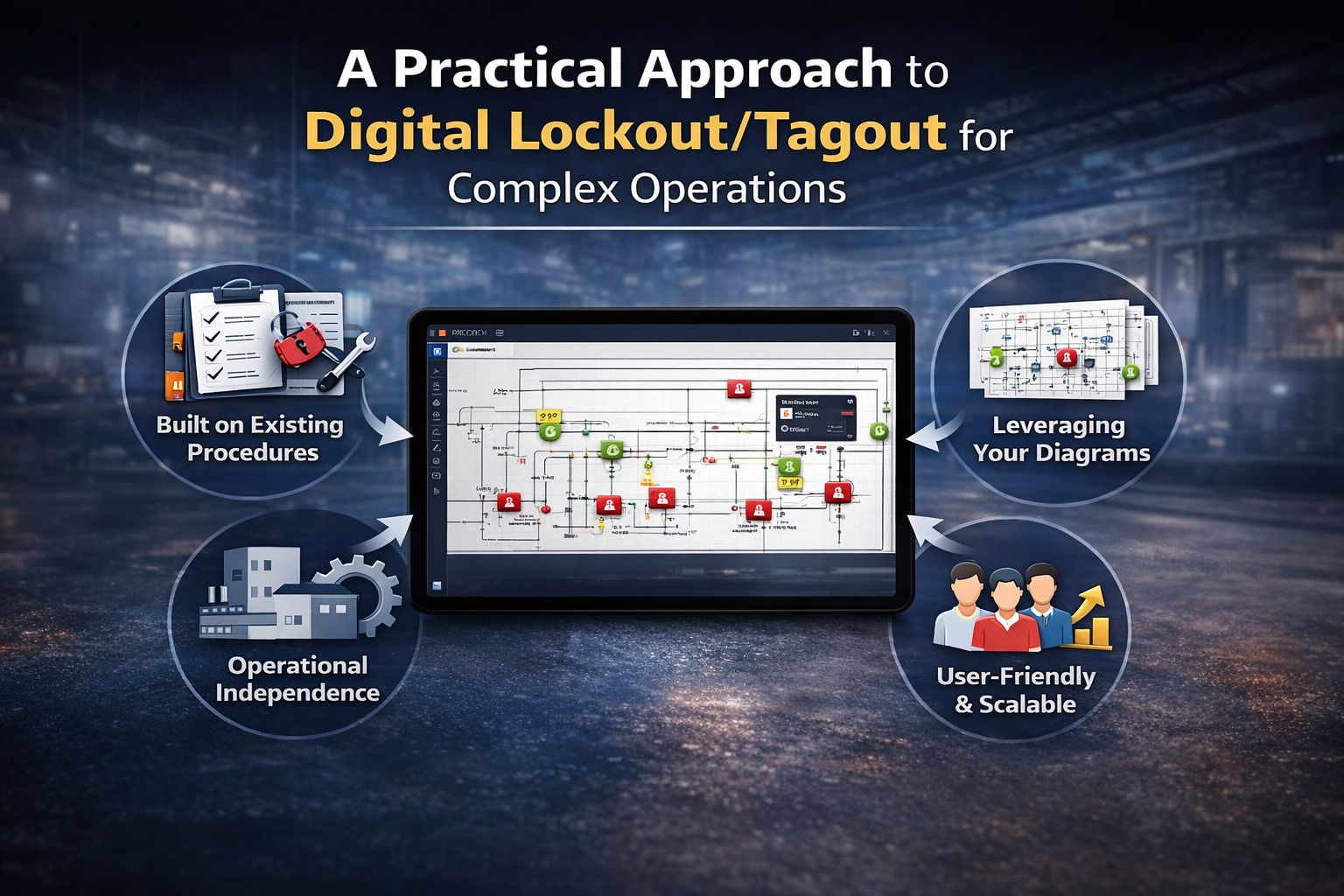
How to Choose Digital LOTO Software for Complex Operations

Digital Lockout Tagout System: Guide & Benefits