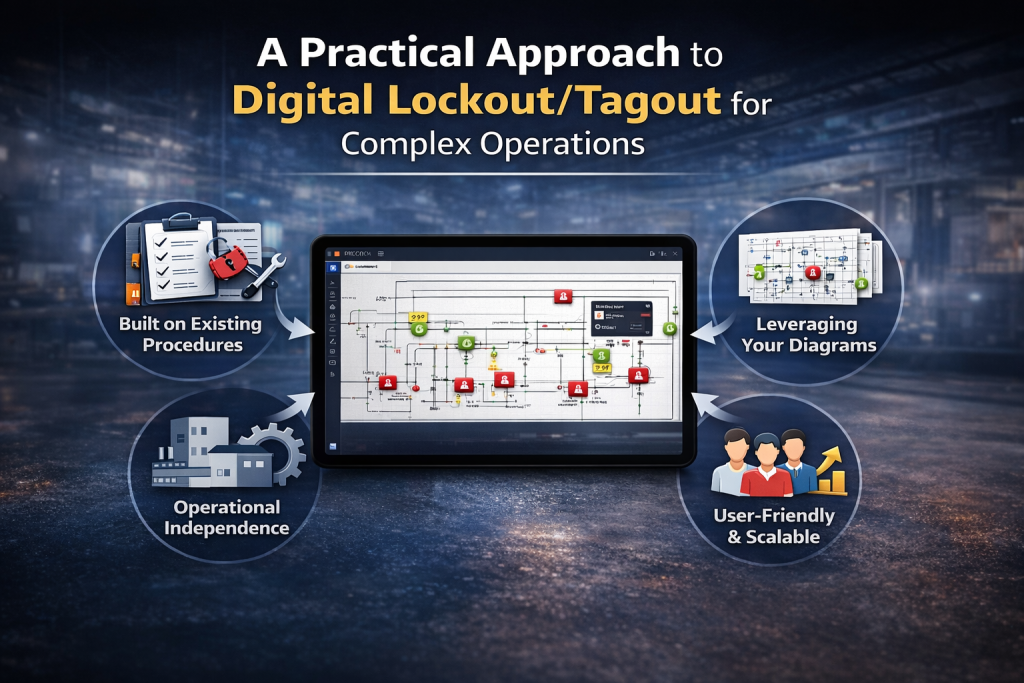
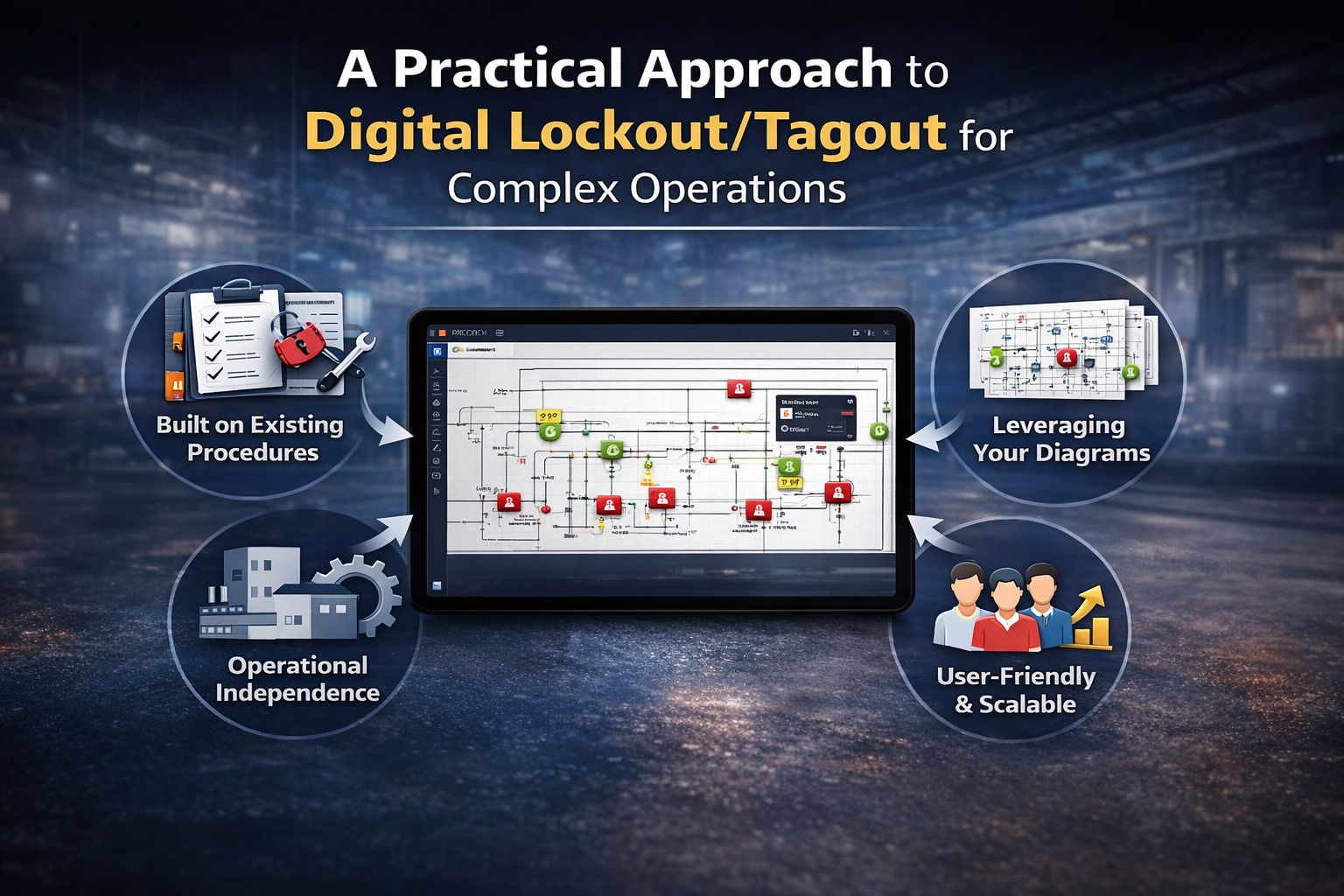
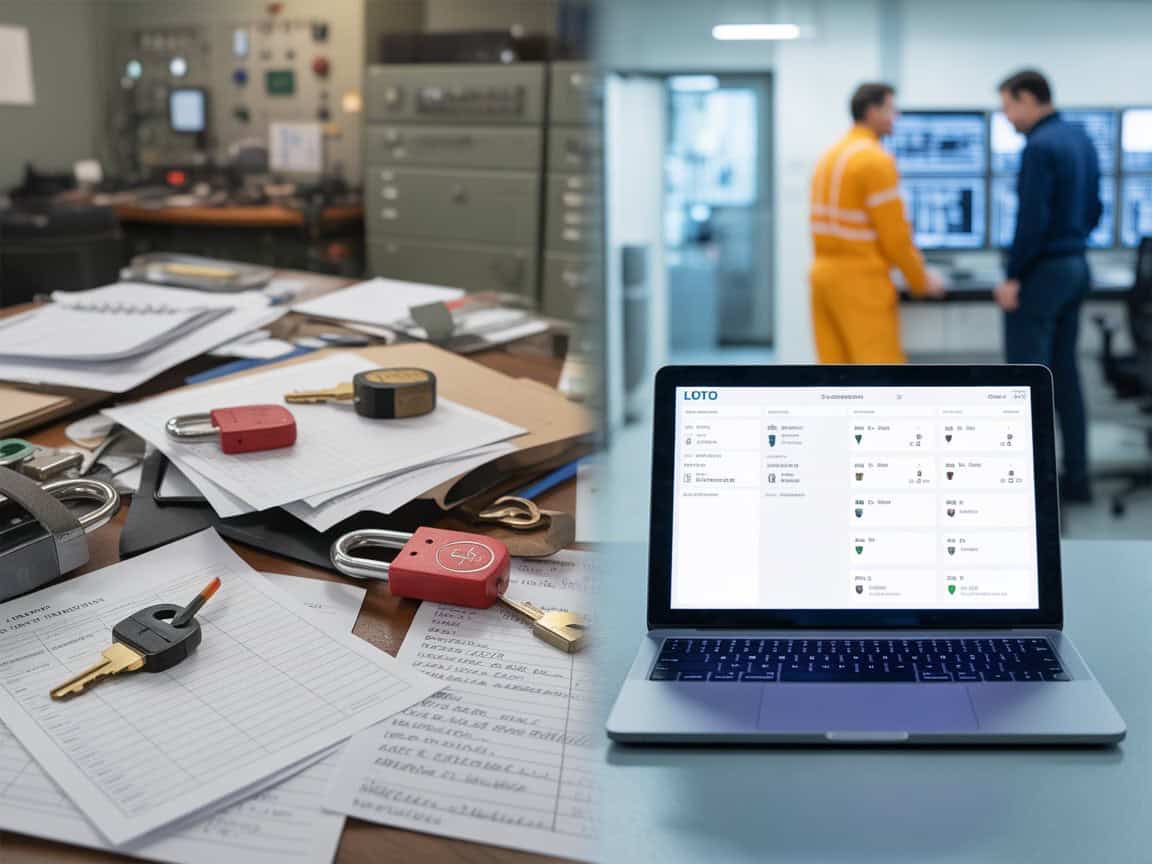
Digital Lockout/Tagout (LOTO) systems are becoming essential to improve safety, traceability, and operational efficiency across industrial environments, data centers, and commissioning projects.
However, selecting the right LOTO solution is not only about features. It is about choosing a platform that integrates seamlessly with your operations, supports your procedures, and scales with your business.
Aligning with Existing SOP and PTW Workflows
A common challenge in LOTO digitalisation is adapting the system to existing procedures.
Many solutions require organisations to modify their internal workflows. This often leads to operational friction, increased training requirements, and reduced adoption.
An effective LOTO platform should:
- Align with your existing SOPs and approval workflows
- Integrate with Permit-to-Work (PTW) processes
- Adapt to site-specific operational requirement
This ensures smooth implementation and long-term consistency across projects.
Leveraging Existing Engineering Diagrams
A key factor often overlooked is how the system handles engineering drawings.
Some solutions require full re-creation or vendor-led mapping of electrical diagrams, which can be time-consuming, costly, and difficult to maintain over time.
A more efficient approach is to leverage existing client drawings, such as single-line diagrams (SLD), and enrich them with operational data directly within the platform.
This allows teams to:
- Work with familiar references already used on site
- Reduce initial setup time and cost
- Maintain consistency with engineering documentation
- Update diagrams internally without full rework
This approach significantly improves usability and long-term scalability
System Dependency Logic for Safer Operations
In complex environments, isolations are driven by system dependencies.
A modern LOTO solution should provide clear operational visibility by linking:
- Equipment
- Isolation points
- System relationships
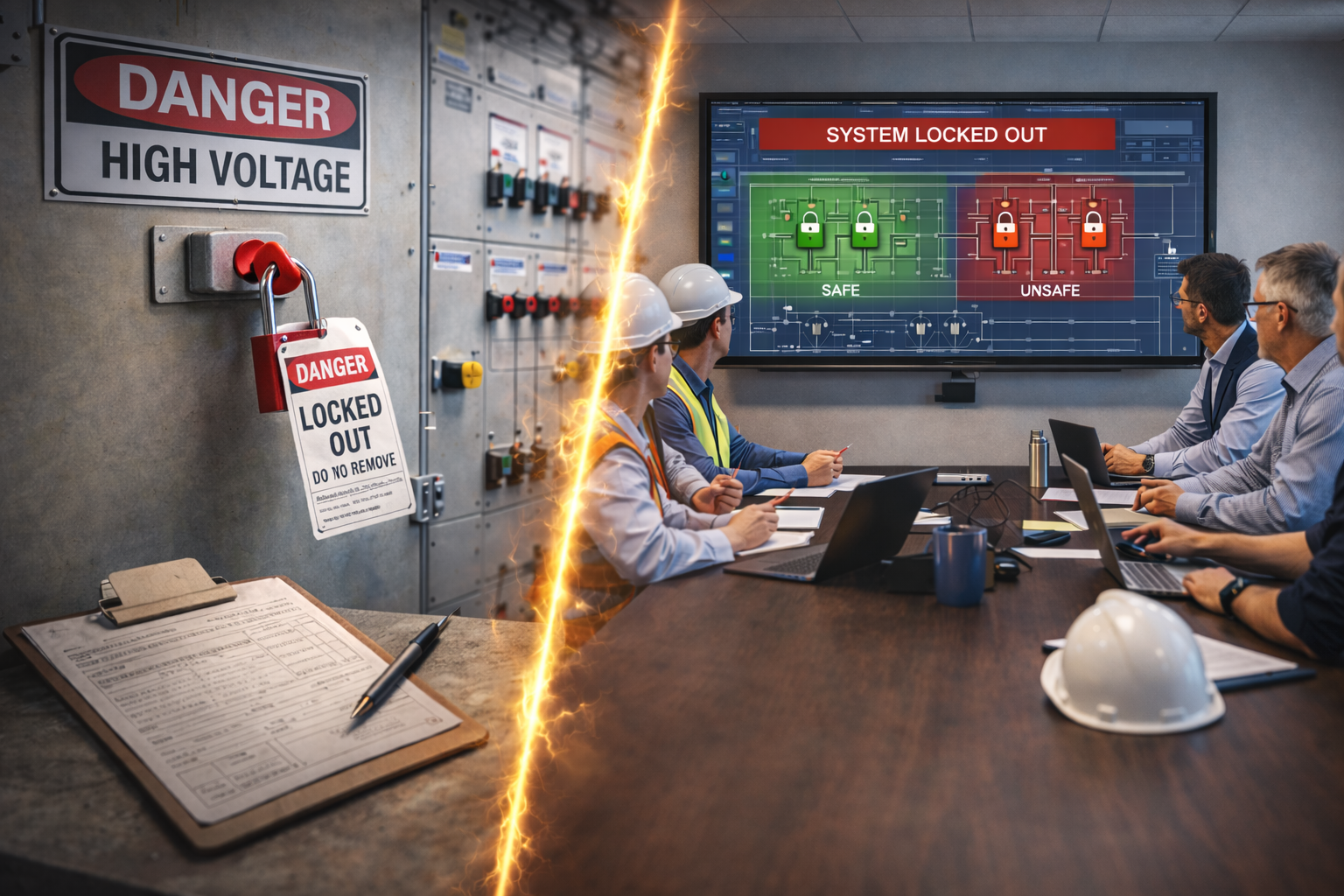
This concept, often referred to as System Dependency Logic, enables teams to understand the impact of each action and reduce the risk of human error.
It is particularly critical during commissioning phases and live operations, where coordination between multiple stakeholders is required.
Supporting Commissioning and Live Operations
LOTO processes must support both commissioning activities and ongoing operations.
These phases often overlap, requiring:
- Controlled energisation workflows
- Clear role-based accountability
- Real-time coordination between teams
A suitable digital solution ensures safe and efficient execution without slowing down project delivery.
Full Traceability and Audit-Ready Compliance
Traceability is a key requirement for any LOTO process.
A digital platform should provide:
- Complete action history and approval records
- Role-based accountability
- Automated audit documentation
This ensures compliance, simplifies audits, and strengthens safety governance across all projects.
Scalable Deployment Across Multiple Projects
For organisations managing multiple sites, scalability is essential.
A LOTO solution should:
- Be deployable across projects without full reconfiguration
- Maintain consistent standards
- Allow controlled flexibility per site
This enables efficient rollout while maintaining operational control.
Avoiding Complex IoT Infrastructure
Some LOTO solutions rely heavily on IoT devices. While attractive in concept, they often introduce unnecessary complexity.
Typical challenges include:
- Full network coverage requirements across multiple areas
- Installation of routers or gateways in each zone
- Dependency on battery-operated devices
This results in higher deployment costs, increased maintenance, and potential reliability issues.
In many environments, a simpler and more adaptable approach provides better performance, faster deployment, and reduced operational risk.
Operational Independence Without Vendor Dependency
Another critical factor is the level of autonomy given to the client.
Solutions that require vendor intervention for:
- Diagram updates
- Workflow modifications
- System adjustments
can slow down operations and increase long-term costs.
A well-designed platform should enable internal teams to:
- Configure and update the system directly
- Manage diagrams and workflows independently
- Adapt quickly to project needs
This ensures agility, efficiency, and long-term sustainability.
User-Friendly for Multi-User Environments
LOTO processes involve multiple stakeholders across construction and operations, including technicians, supervisors, managers, and auditors.
The system must therefore be intuitive and easy to use for all profiles, regardless of their technical background.
A complex interface increases the risk of errors, slows down operations, and reduces adoption on site.
LOTOControl is designed for real field conditions, with a clear and simple interface that enables users to execute, validate, and track isolations efficiently with minimal training.
Conclusion: Choosing the Right LOTO Digital Solution
The success of a LOTO digitalisation strategy depends on more than technology
The right solution should:
- Integrate with your existing processes
- Leverage your current engineering documentation
- Provide clear system visibility
- Scale across projects
- Minimise infrastructure complexity
- Enable operational independence
By focusing on these principles, organisations can achieve safer operations, improved efficiency, and long-term value.